Prohibition and Canadian Whisky: How a U.S. Ban Created a Canadian Empire
Welcome back to the Spirit for Us blog.
In our last post, we looked at the founding titans of the Canadian whisky industry. But to understand how our native spirit achieved total global dominance in the mid-20th century, we have to talk about a critical, chaotic 13-year period when our biggest customer decided to make drinking illegal.
American Prohibition didn't just create a sophisticated black market; it completely rewired the global landscape of distilled spirits. It turned Canadian distillers from successful regional businesses into international empires.
Here is how the era of rum-running and bootlegging cemented Canadian whisky's place in history.
The Great Legal Loophole
On January 17, 1920, the Volstead Act went into effect, plunging the United States into Prohibition. Overnight, every American brewery, winery, and distillery was forced to shutter.
Canada, meanwhile, was navigating its own temperance movement. Throughout the 1910s, various Canadian provinces enacted their own "dry" laws. However, there was a massive, highly lucrative loophole that changed everything: while provincial governments could ban the retail sale of alcohol within their borders, the federal government controlled international trade.
This meant that Canadian distilleries were legally allowed to continue manufacturing alcohol, provided it was strictly for export.
With American distilleries closed and American demand higher than ever, Canada's large producers—like Gooderham & Worts, Hiram Walker, and Seagram—went into overdrive. Legally, they were selling whisky to export brokers. What those brokers did once the ships left the Canadian dock was, officially, not the distillers' problem.
Rum Row and the Detroit River
Getting the whisky into the United States spawned one of the most sophisticated smuggling networks in history. It happened on two main fronts:
1. The Marine Smugglers (Rum Row)
Ships loaded with Canadian whisky would legally set sail for destinations like Cuba, Bermuda, or the French islands of St. Pierre and Miquelon (just off the coast of Newfoundland). From there, smaller, incredibly fast smuggling boats would purchase the liquor and anchor just outside the 3-mile US maritime limit—a floating black market known as "Rum Row."
2. The Windsor-Detroit Funnel
While the coastal rum-runners get the Hollywood treatment, the true artery of Prohibition was the Detroit River. Separating Windsor, Ontario from Detroit, Michigan, this narrow, highly trafficked waterway became a bootlegger's paradise. It is estimated that a staggering 75% of all illegal liquor smuggled into the US during Prohibition passed through Detroit.
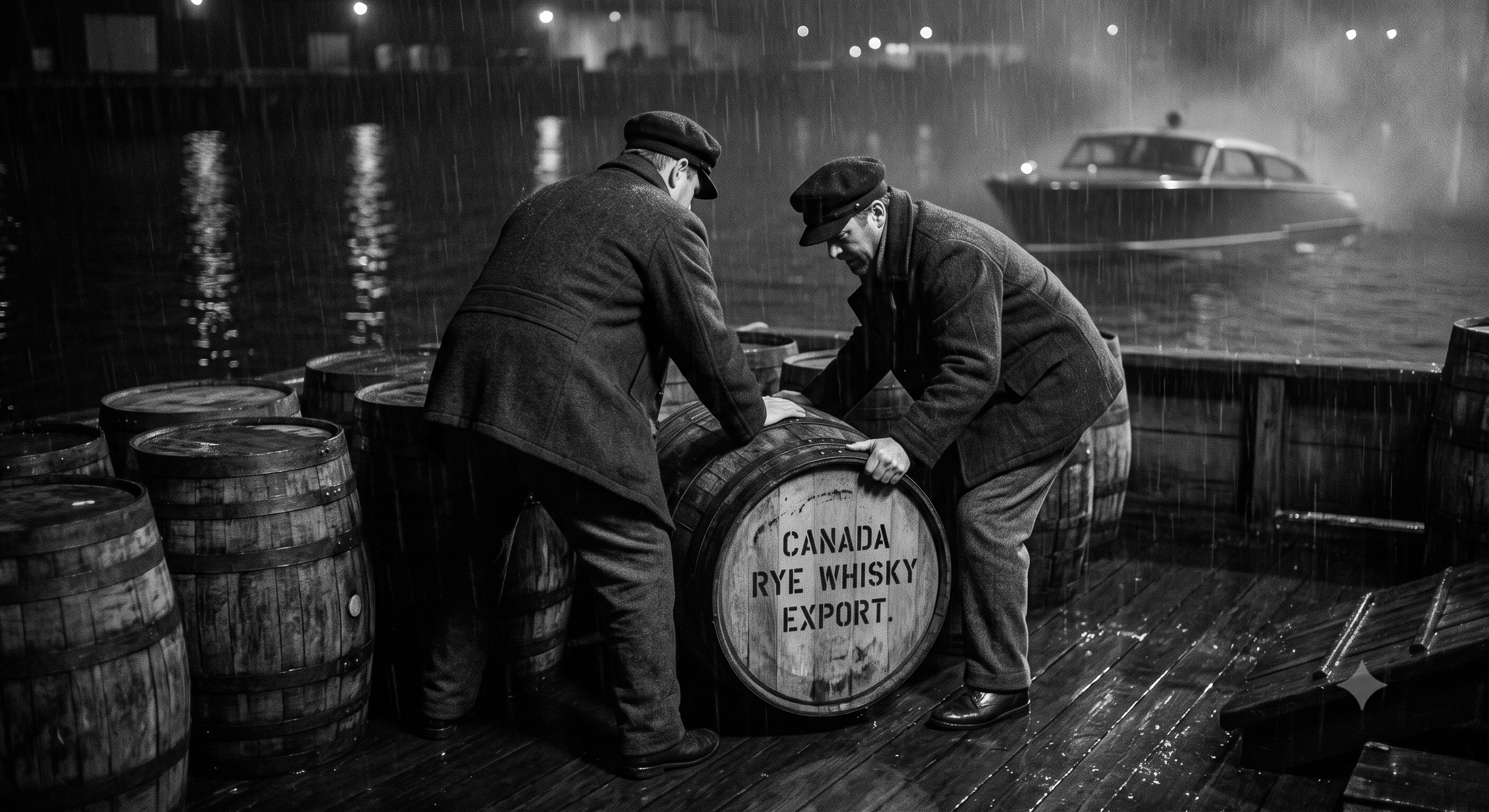
Moody close-up of aged whisky barrels being loaded onto a rum-runner's freighter at a Canadian dock during Prohibition.
In winter, bootleggers would simply drive heavily loaded, modified cars across the frozen river. In summer, speedboats dashed across in the dead of night, often supplying notorious crime syndicates like Detroit's Purple Gang and Al Capone's Chicago Outfit.
"The Real McCoy" and the Counterfeit Boom
Before Prohibition, American drinkers generally preferred their own robust bourbons and heavy, spicy straight ryes. But beggars can't be choosers. When forced underground, Americans drank whatever the bootleggers provided.
Because genuine Canadian whisky was highly prized, it commanded top dollar in the speakeasies. This inevitably led to a massive counterfeit market. Unscrupulous mobsters would buy cheap industrial alcohol, mix it with prune juice, iodine, or wood shavings for color, and slap a fake Canadian label on it.
This gave rise to legendary figures like Bill McCoy, a rum-runner famous for never watering down or doctoring his imported cargo. When you bought from him, you knew you were getting genuine, high-quality whisky—hence the phrase, "The Real McCoy."
🧪 The Art of the Authenticity Chase
To combat the counterfeiters, Canadian brands began heavily marketing their unique bottle shapes and secure closures. They encouraged patrons to "ask for their whisky by name" to ensure they were getting the real thing. It was an early exercise in brand protection and quality assurance that still resonates today.
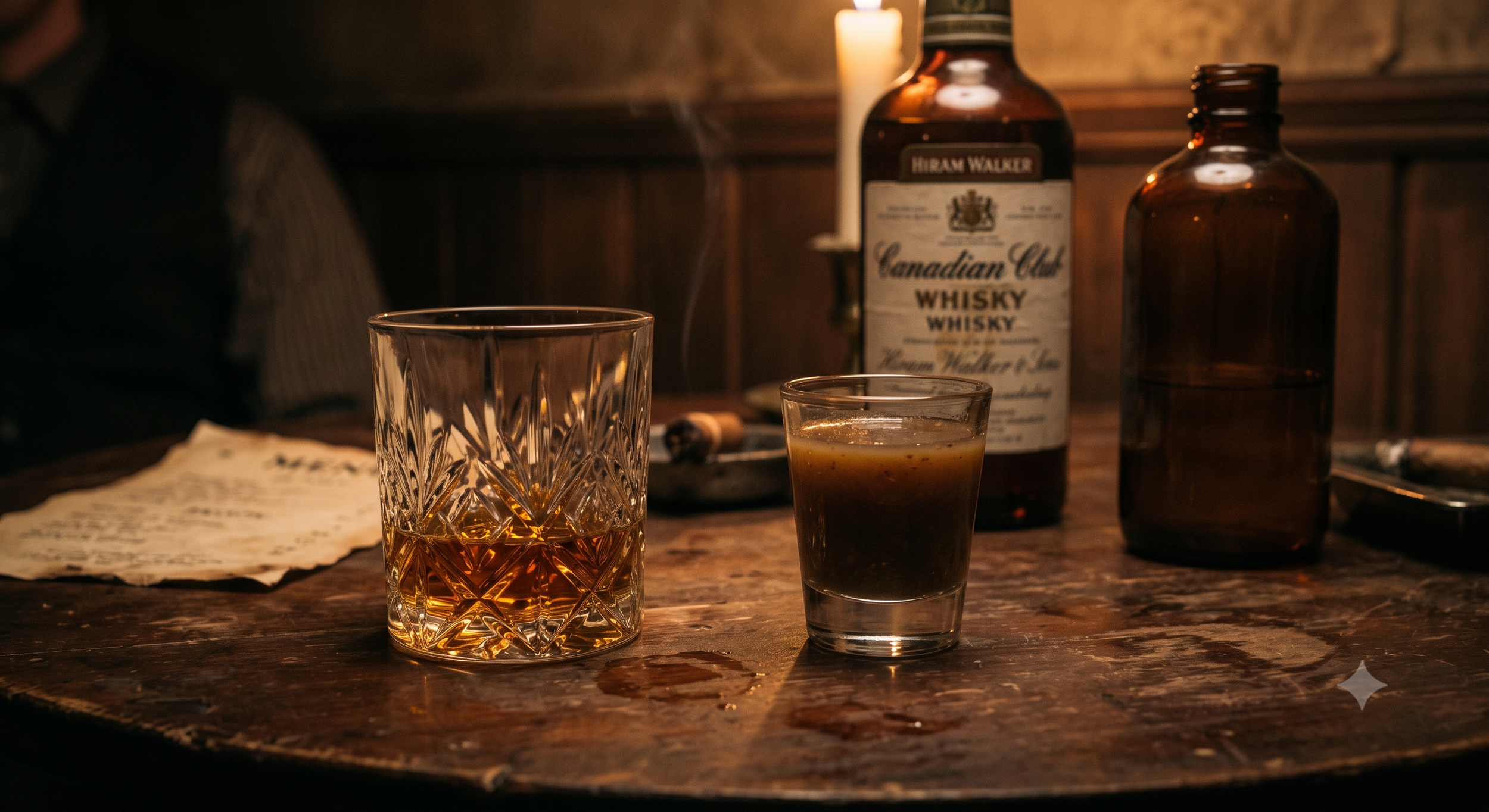
A side-by-side comparison of authentic Canadian whisky and dangerous Prohibition-era counterfeit bootleg alcohol in a dimly lit speakeasy setting.
The Legacy: Changing the American Palate
When the 21st Amendment finally repealed American Prohibition in 1933, the US distilling industry had to start from scratch. Their warehouses were empty, their barrels were gone, and they had no aged stock to sell.
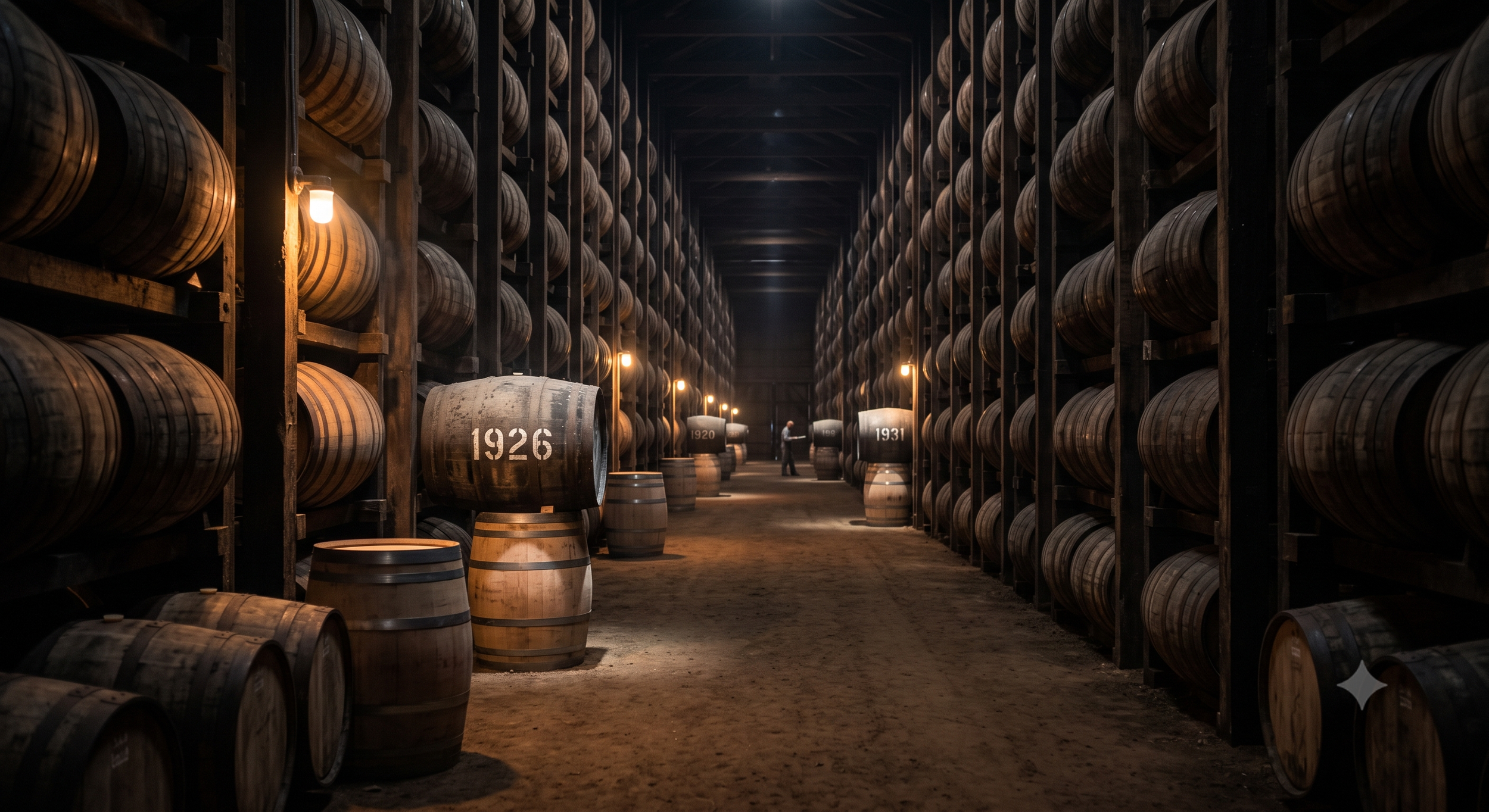
Canada's distilleries, conversely, had spent the last 13 years expanding their operations exponentially. Their warehouses were bursting with millions of gallons of perfectly aged, mature whisky.
More importantly, an entire generation of American drinkers had come of age drinking Canadian whisky. After 13 years of sipping our smoother, lighter, blended style in speakeasies, the American palate had fundamentally shifted. Even when bourbon returned to the shelves, millions of Americans simply preferred the Canadian profile they had grown accustomed to.
This massive head start propelled brands like Canadian Club and Crown Royal to global dominance for the next half-century, firmly establishing Canada as a whisky superpower.
Today, that same spirit of innovation—minus the speedboats and the Coast Guard chases—lives on in the independent casks we select.
Explore our latest releases at Spirit for Us, and taste the legacy for yourself.
Cheers! The Spirit for Us Team